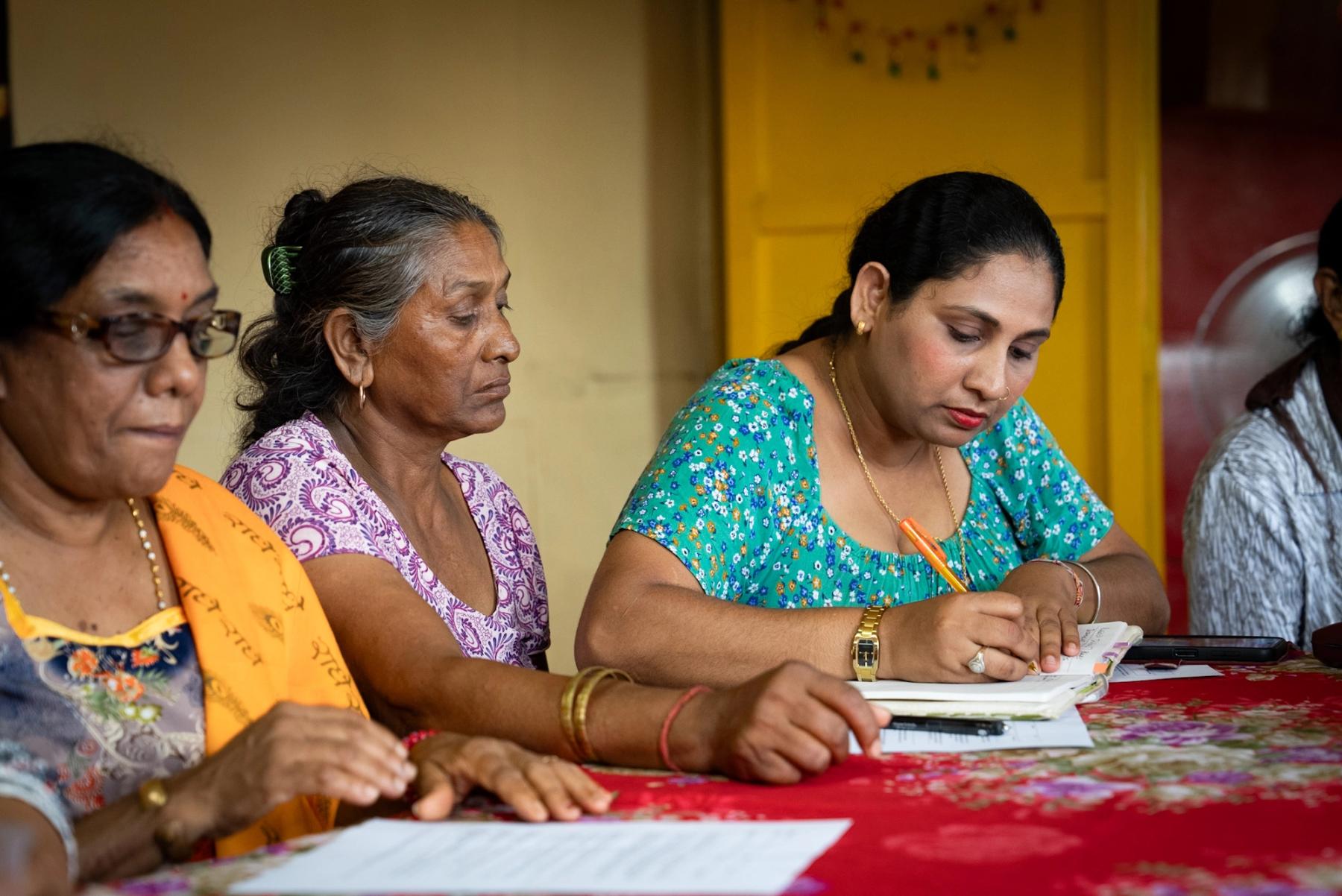
Fiji: Atishma, a member of a women's club in the community of Waituri fills out a form as Jasodra and Raj look on. The women's group is part of a project by the Pacific Centre for Peacebuilding (PCP) called the Women's Peacebuilding Ambassadors Network linking women across Fiji as ambassadors for peacebuilding in their communities. Photo: Alipate Laveti/Oxfam
Writing to your Member of Parliament
Whether you're advocating for climate action or social equality, contacting your local MP is a powerful, accessible way to push for meaningful progress.

Australia: Zedi Vahia Devesi is a passionate advocate for climate action from the Solomon Islands. He was one of three speakers for the Safe Climate, Equal Future Speakers Tour. Photo: Irene Dowdy/Oxfam
Passionate politics
Creating real change starts with making your voice heard — and one of the most effective ways s by writing to your Member of Parliament (MP). MPs are elected to represent your community, but they can only act on issues they know people care about.
A well‑crafted message from a constituent can spark conversations in Parliament, influence policy decisions, and draw attention to causes that might otherwise be overlooked.
But how do you make your letter or email stand out? Here are a few simple tips for maximising the impact of your correspondence.
Use the correct title
In the case of letters, set out the name and address of the MP or Senator in the top left-hand corner. This is not necessary in the case of emails. An MP’s name should be stated in the address as follows: ‘Mr/ Mrs/Ms/Dr First Name Last Name MP’. A Senator’s name should be stated as follows: ‘Senator First Name Last Name’.
MPs or Senators who are, or have been, government Ministers, are given the title ‘The Honourable’. For ministers in the House, this becomes ‘The Hon. First Name Last Name MP’ and ‘Senator the Hon. First Name Last Name’ in the case of Ministers who are Senators.
Start your letter as follows: ‘Dear Sir/Madam’ or ‘Dear Mr/Mrs/Ms/Dr Last Name’ in the case of MPs, and ‘Dear Senator’ or ‘Dear Senator Last Name’ in the case of Senators.
Find your Representative/Senator and how to address them
If you are not responding to something, but writing off your own bat, think about whether there have been any related issues in the paper or on the news recently. If you can tie your letter into a current issue you will have a better chance of getting it published.
Introduce yourself and your issue
Start your letter out by saying who you are and why you are writing to them. If you are a member of their electorate, make this clear. It can also be helpful to briefly set out any relevant connections in the community – for example, you may want to indicate that you attend a local school or church, are involved in a youth group or Rotary organisation, or work for a local business.
If your letter is about a particular region or country and you have visited it, outline this connection.
Keep it brief
Your letter should be as short and simple as possible. Try to keep it to one or two pages. Ideally it should be typed, or written very neatly and signed by hand. Stick to one issue per letter and use simple points to make your case. Write logically in well set out paragraphs.
If the issue is technical or requires further explanation, keep your letter short but include an additional document which sets out the extra information. Alternatively, you can refer the MP to a website, article or book where they can get more information. Sending reams of paper is not an effective way of getting attention. In fact, there is a high possibility that most of the information won’t be read.
Use your own words
Politicians’ offices receive hundreds of letters from constituents. Your objective is to make your letter stand out from the crowd.
Often an organisation will start a campaign and ask its members and supporters to send pre-written letters to their MPs. These are called ‘form letters’. While form letters do have some value in demonstrating the level of community support or opposition to a particular issue, they do not have the same impact as a well crafted, passionate and personal letter.
If you are asked to send a form letter in support of a particular campaign, take the time to personalise it by adding your own thoughts, or putting the points in your own words.
It can be useful to:
- Include relevant facts and figures
- Refer to a recent news item about the issue
- Highlight a local connection to the issue
- Include a personal experience that made you want to speak up on the issue
Be polite
Being polite and respectful in your letter is far more likely to achieve positive results than being insulting or abusive. If you disagree with a stance your MP has taken, or some comments they have made, say so, but in a reasoned, forthright way. Rather than generating a response, an abusive or threatening letter may be forwarded to the police.
Tell them what you want them to do
Simply telling your MP how you feel about an issue is unlikely to bring about change – you need to tell them what you want them to do about it. This could include any number of actions from voting for or against something in Parliament to attending a local event. But, the most important thing you should ask for is a reply to your letter.
Read more on what you can ask your MP to do.
Provide your contact details
It’s no good writing a passionate letter requesting action if you forget to provide your contact details. Make sure your letter includes your first and last name, your address, telephone number, and email address if you have one.
Be patient
It’s important to remember that MPs receive hundreds of letters and only have a few staff to assist them in responding to these letters. This means you could experience a lengthy delay in receiving a response to your letter. Sometimes it could take up to a month to hear back from your MP.
Follow up
If you have not received a response after one month, telephone the MPs office to remind them about your letter and check when you are likely to receive a response. If you do not receive a response within a fortnight of your call, try again. And keep trying until you succeed. Persistent, but polite, constituents tend to get what they want! Remember, your MP has a responsibility to represent you and to communicate with you. That is why they were elected and why they are paid.
Learn more about politics
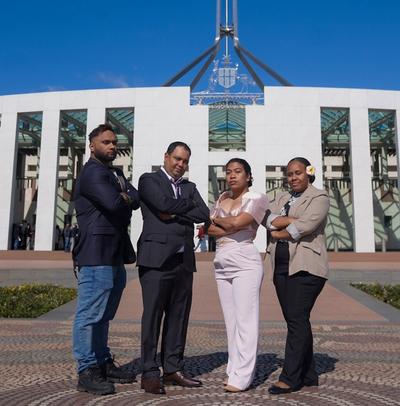
Australia: Four climate activists from the Kimberley, the Philippines and the Solomon Islands came together for the Safe Climate, Equal Future Speakers tour in September 2024. Photo: Heidi Demond/Oxfam
Take political action
The Parliament of Australia makes decisions that impact you and how you live your life on a daily basis.
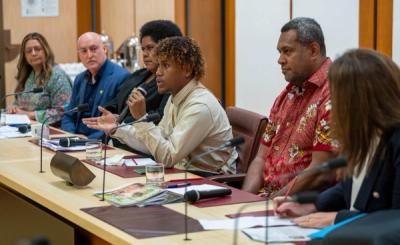
Australia: Zedi Vahia Devesi speaks in Parliament House, Canberra as part of the Safe Climate, Equal Future Speakers Tour. Photo: Irene Dowdy/Oxfam
What you can ask your member of parliament
Learn how your local MP can take action on issues that are important to you.

South Sudan: Jun Ajuk, Oxfam health promoter speaks to Sudan refugee and returnees on the importance of mantaining hygiene to avoid spread of dieases. Photo: Herison Philip Osfaldo/Oxfam
Writing a letter to the editor
Writing a letter to the editor is one of the easiest ways to get your message across to thousands of readers.