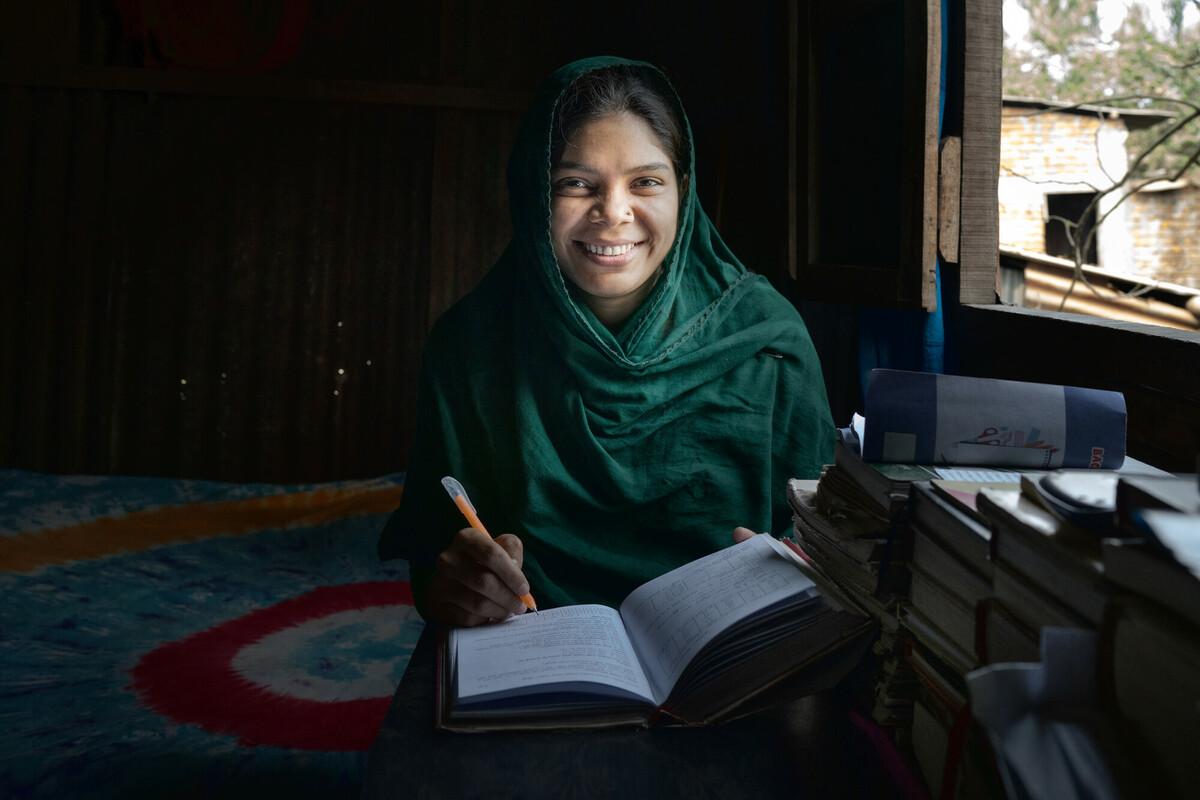
Bangladesh: Sharmin (23) received training with Green Jobs. She and other women are making jute products. They make lunch carrier bags, ladies bags, handcrafts, wall-mates and penholders, among other things. Photo: Fabeha Monir/Oxfam. Oxfam acknowledges the support of the Australian Government through the Australian NGO Cooperation Program (ANCP).
Writing a press release
When you’re speaking up on an issue that matters, a media release is one of the most powerful tools you can use.
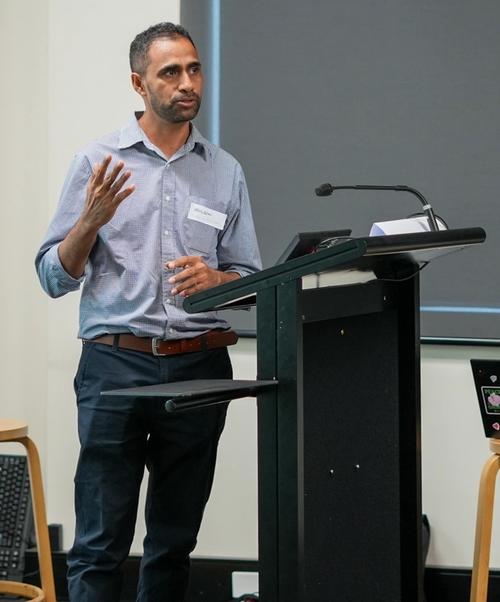
Australia: Pankaj Anand, Country Director of Oxfam in Timor-Leste, and Adilson da Costa Junior, Strategic and Engagement Lead in Oxfam in Timor-Leste, visited Australia to meet with supporters and to share their vision and hope for Timorese people. Photo: Heidi Demond/Oxfam
Passionate politics
Media releases are one of the most effective ways to share news, announcements, and stories with the public. They help build credibility, reach wider audiences, and shape the narrative around the moments that matter most.
The media is broad and diverse and there are many thousands of small publications and radio programs focusing on specific areas of interest.
Here's how you can craft a media release that ensures your message gets noticed.
Follow format protocol
A media release should be set out on a standard size (A4) sheet of paper with a margin of at least 2 centimetres on each side and at the top and bottom. It should include the words ‘Media Release’ in large, bold font near the top of the page, so that it is clear what it is.
It is also important for the media to know exactly who has issued the media release. If you are writing it on behalf of an organisation, you can use letterhead or a small logo. If you are writing it on your behalf, you will need to make sure your name and a relevant description of yourself are set out near the top of the page – for example, ‘Melanie Brown, Smith Street High School Student’. Don’t use graphics or pictures on the release.
Catchy headline
The headline of your media release will be the first thing a reader looks at. Put it in bold, large font. The headline serves two purposes: the first is to make it clear what the issue is and what the main message of the media release is, and the second is to catch the reader’s attention and inspire them to read on. For these reasons, the title should be short, punchy, bold and clever.
Say it in the first sentence
Think about the most important and catchy point you want to make and put it in the first sentence. Remember the journalist may never make it to the bottom of the page!
Keep it short and sharp
A media release should never exceed one page. Don’t forget that the main purpose of the release is to catch the media’s attention. If they need more information, they will contact you to follow up.
Style matters
Being polite and respectful in your letter is far more likely to achieve positive results than being insulting or abusive. If you disagree with a stance your MP has taken, or some comments they have made, say so, but in a reasoned, forthright way. Rather than generating a response, an abusive or threatening letter may be forwarded to the police.
Tell them what you want them to do
Your sentences and paragraphs should be short and sharp. Set your other points out clearly and logically and delete any unnecessary words or phrases. Try not to use acronyms, abbreviations or jargon. Although it may seem like stating the obvious, try not to make your media release boring. Boring stories do not make news.
Include quotes
It’s no good writing a passionate letter requesting action if you forget to provide your contact details. Make sure your letter includes your first and last name, your address, telephone number, and email address if you have one.Direct quotes are essential in a media release. They enable a journalist to report on the issue or event as if they had conducted an interview with you. Remember, you may only get one quote into a radio story or newspaper article, so each quote should be worthy of publication. Ideally, quotes should be short, punchy and contain an interesting piece of information or argument.
Individuals quoted in a media release should be identified by their position – for example, ‘Matthew Davis, Chair of the Broken Hill Aboriginal Health Action Group’.
Does it pass the ‘no idea’ test?
If someone with no background on your issue read your release, would they understand it? Your release must be informative, interesting, relevant and, most importantly, easy to understand. You must inspire the reader to want to do something about your issue.
Back it up
If you are making claims, you need to have facts and figures to back them up. Try not to make generalisations.
Don’t be libellous
It is critical that you don’t make statements in a media release that could get you sued. Statements like, “The Minister is a liar”, even if they may be true, are not a good idea.
Include contact details
The last thing on your media release should be the name of a contact person and their contact details. Make sure the contact person is going to be available to take calls from the media on the number you have provided.
Final checks
If you have time, put the release aside for an hour then re-read it. Ask yourself whether it is logical, informative and compelling. Is everything spelt correctly? Is it something that will advance your issue or organisation? If so, it’s ready to go!
Learn more about politics
Australia: Zedi Vahia Devesi speaks in Parliament House, Canberra as part of the Safe Climate, Equal Future Speakers Tour. Photo: Irene Dowdy/Oxfam
What you can ask your member of parliament
Learn how your local MP can take action on issues that are important to you.
South Sudan: Jun Ajuk, Oxfam health promoter speaks to Sudan refugee and returnees on the importance of mantaining hygiene to avoid spread of dieases. Photo: Herison Philip Osfaldo/Oxfam
Writing a letter to the editor
Writing a letter to the editor is one of the easiest ways to get your message across to thousands of readers.
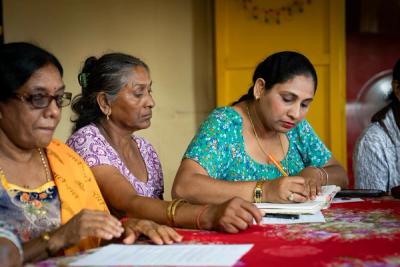
Fiji: Atishma, a member of a women's club in the community of Waituri fills out a form as Jasodra and Raj look on. The women's group is part of a project by the Pacific Centre for Peacebuilding (PCP) called the Women's Peacebuilding Ambassadors Network linking women across Fiji as ambassadors for peacebuilding in their communities. Photo: Alipate Laveti/Oxfam
Writing to your Member of Parliament
Whether you're advocating for climate action or social equality, contacting your local MP is a powerful, accessible way to push for meaningful progress.